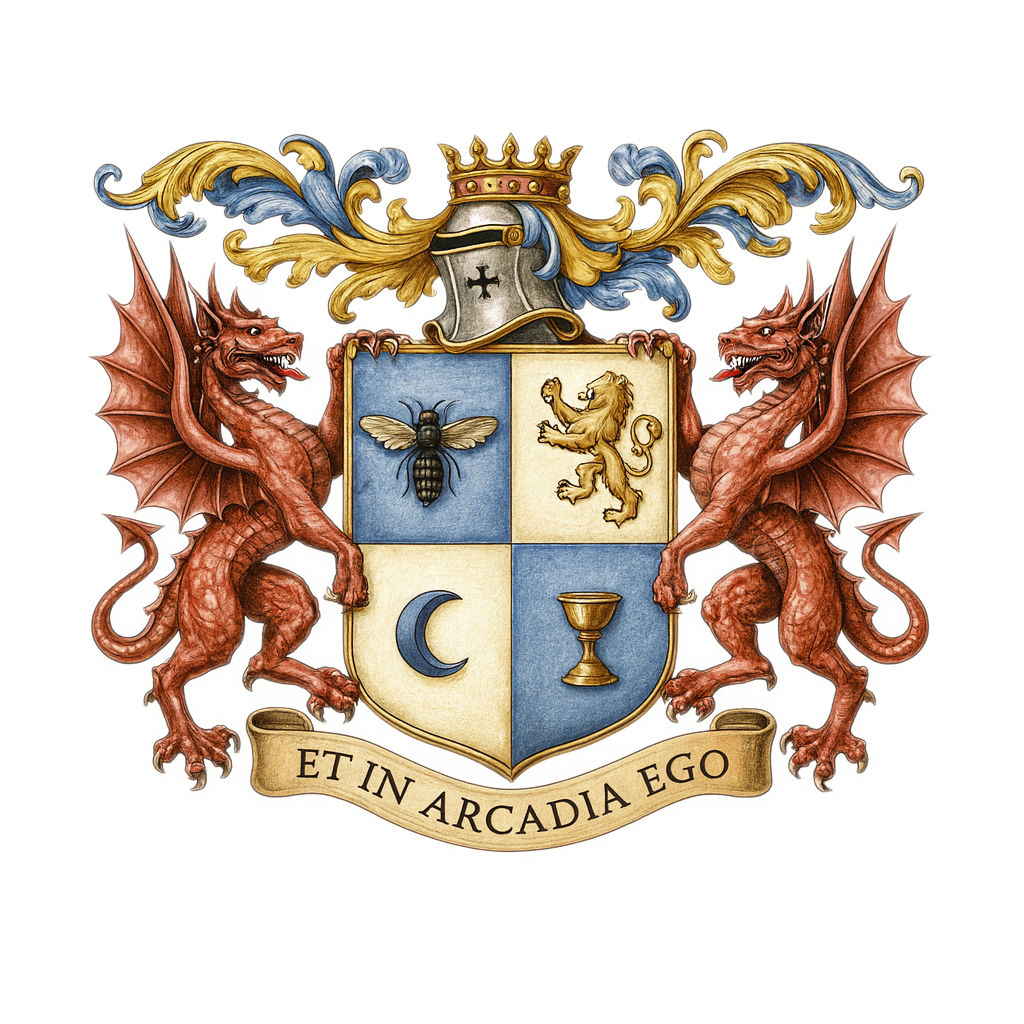

The Refoundation of The Prieuré de Sion
Tradition and Living Knowledge
The Prieuré de Sion is an initiatic and chivalric Order founded on 15 July 1099 in Jerusalem by Godfrey of Bouillon, at the Abbey of Our Lady of Mount Sion, under the original designation “Order of Our Lady of Mount Sion.”
After having been formally registered for the first time in modern history in 1956, and subsequently dissolved in 1993, the Order was legally re-registered in 2015, thereby reaffirming and perpetuating the legitimate initiatic line of transmission associated with Pierre Plantard de Saint-Clair.
This continuity is presently upheld under the governance of the current Grand Master, Marco Rigamonti, ensuring the preservation and living transmission of the Order’s initiatic and chivalric heritage.
The Prieuré de Sion is not merely the custodian of an uninterrupted initiatic lineage or the guardian of ancient rituals rooted in the chivalric tradition. While these elements form an essential part of its identity, the Prieuré de Sion understands itself above all as a living institution, one that continues to evolve and to engage actively with the intellectual instruments made available by contemporary scientific, philosophical, and anthropological research.
The chivalric tradition preserved by the Order is not conceived as a relic of the past, frozen in symbolism or ritual repetition. Rather, it is understood as a coherent system of values, metaphysical intuitions, and anthropological insights that has always sought to address the fundamental questions of human existence: the nature of consciousness, the relationship between the individual and the world, and the deeper structure of reality itself.

Tradition and Modern Science
In recent decades, modern science—particularly neuroscience, physics, and cognitive science—has reached a point of profound tension. Despite enormous technological progress and unprecedented volumes of empirical data, certain foundational questions remain unresolved. Among these, the problem of consciousness occupies a central position.
An Initiatic Christianity of Inner Knowledge
Beyond its chivalric and initiatic dimension, the Prieuré de Sion perpetuates a form of early and initiatic Christianity rooted in self-knowledge as both the point of departure and the enduring instrument of inner transformation. In this perspective, the knowledge of oneself is not a moral accessory, but the very foundation of spiritual growth and the progressive expansion of consciousness.
This tradition understands Christianity not primarily as a system of external dogma, but as a path of interior awakening, in which personal responsibility, inner discernment, and direct experience of the sacred take precedence over institutional mediation.

The Contemporary Relevance of the Chivalric Path
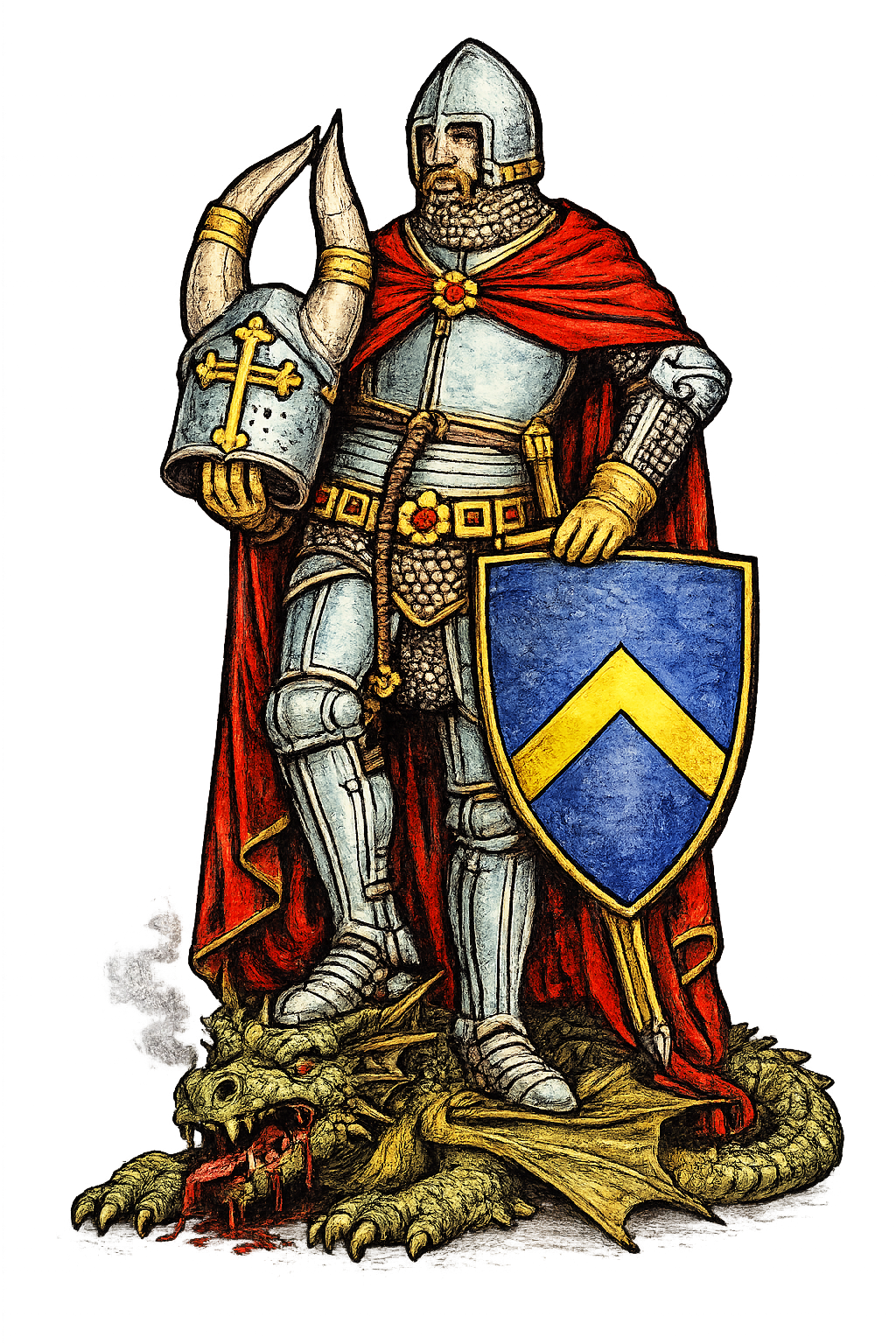
In an age often characterized by fragmentation, immediacy, and the erosion of enduring values, the traditional chivalric path remains not only relevant, but profoundly necessary. Far from being a romantic survival of a distant past, chivalry represents a disciplined and structured way of life that addresses permanent dimensions of the human condition—discipline, honor, perseverance, responsibility, and inner growth.
The enduring validity of the chivalric way lies precisely in its capacity to form individuals capable of standing upright within themselves and within the world.
The Merovingian Lineage and the Prieuré de Sion
From Dagobert II to Pierre Plantard
According to the internal tradition of the Prieuré de Sion, the Order maintains a direct symbolic and initiatic continuity with the Merovingian dynasty, extending from King Dagobert II to Pierre Plantard de Saint-Clair.
This continuity is understood not merely in dynastic terms, but as the transmission of a sacred kingship tradition in which royal authority, spiritual legitimacy, and initiatic responsibility are inseparably united.
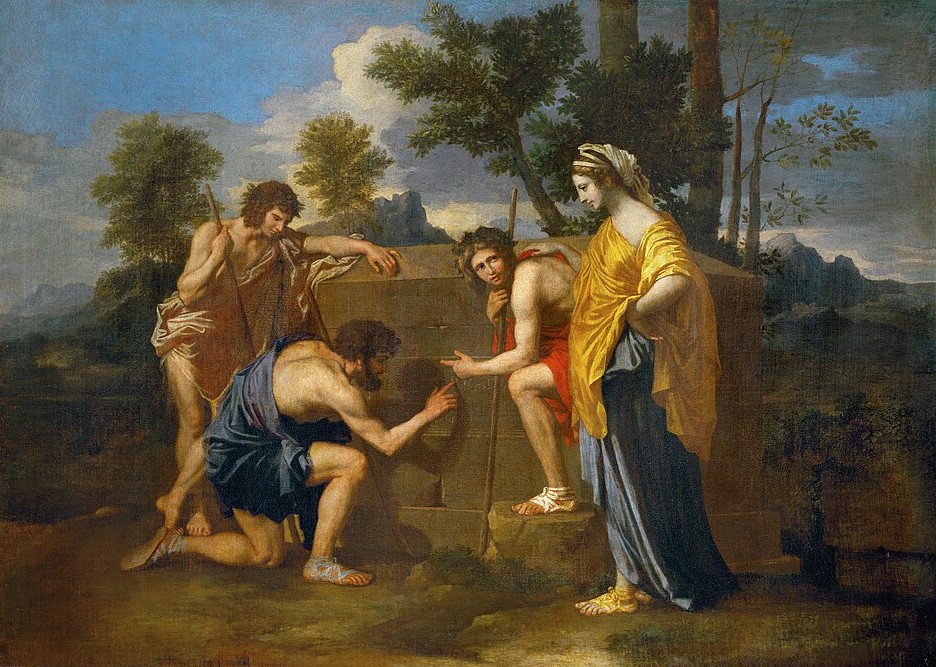
Nicolas Poussin
“Et in Arcadia ego” is the inscription that appears, in encoded form, on the funerary slab of Marie de Négri d’Ables, Marquise of Blanchefort. It is also one of the most renowned inscriptions in Western art history, having been employed in several significant seventeenth-century paintings and sculptures—most notably by Nicolas Poussin, as the epitaph in his celebrated painting Les Bergers d’Arcadie (1638–1640), which will be the focus of the present analysis.
The Church of Rennes-le-Château
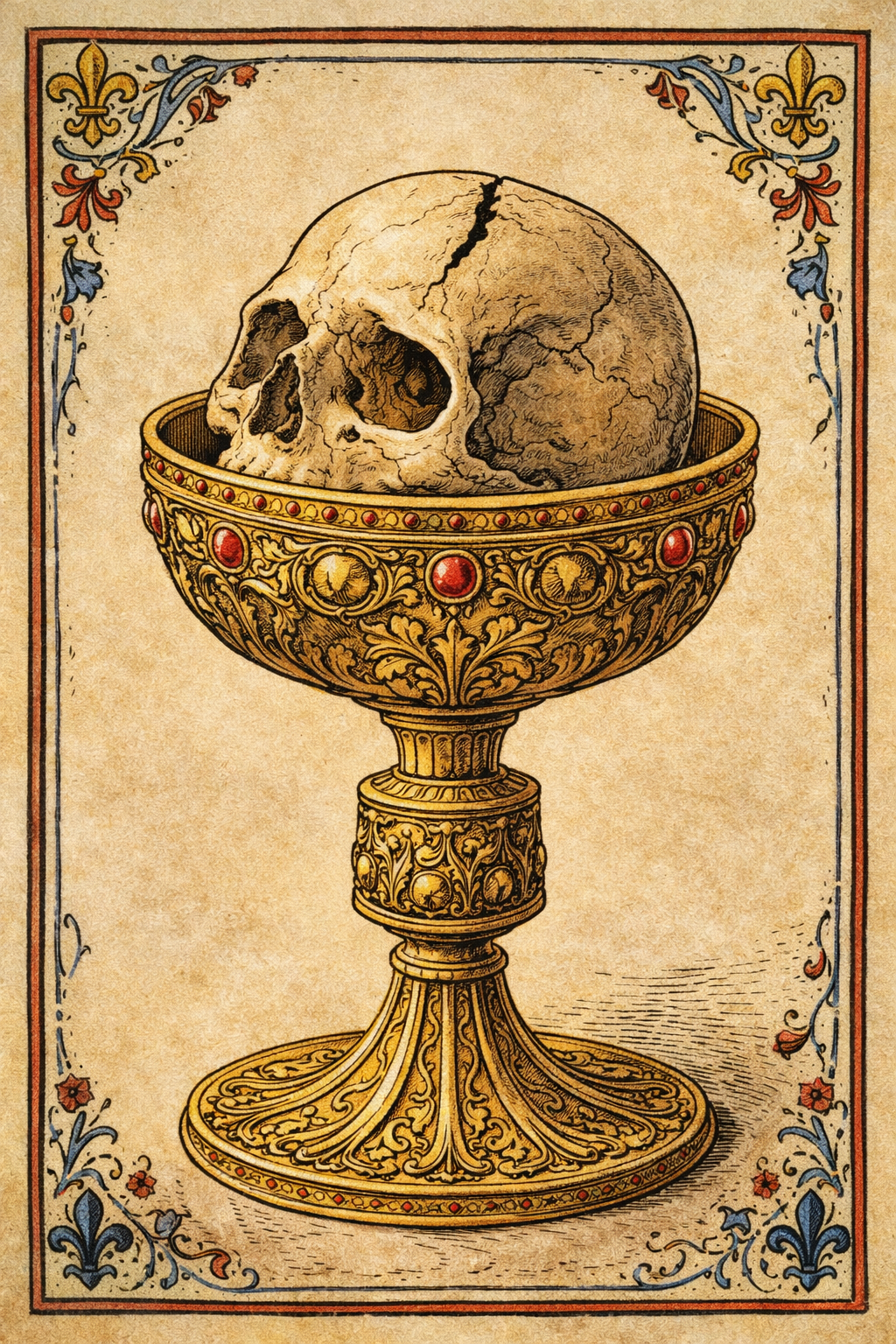
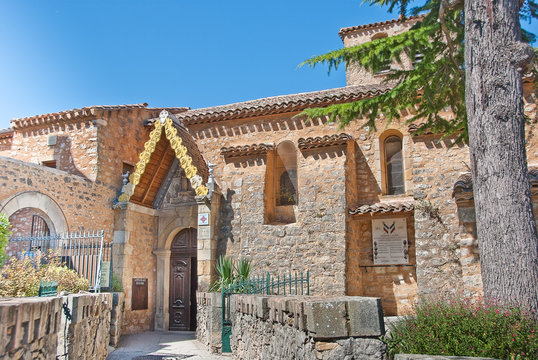
In France, there exists a church that bears direct witness to a tradition identifying Saint Mary Magdalene as the bearer of a lineage connected to Jesus and intimately associated with the mysteries of the Holy Grail. Through a dense system of symbols and allegories, this church reveals—once carefully examined—the deliberate intention of those who restored and preserved it to establish a clear relationship between the Grail and Mary Magdalene.
At the same time, the site is traditionally associated with the discovery of significant historical documents that would attest to a connection between the Merovingian dynasty and the bloodline of Jesus. Of this knowledge, only oral tradition and a limited number of investigative elements have reached us today. The original documents themselves are, at present, considered lost, and their recovery remains the subject of ongoing research.
These themes emerge most clearly through an analysis of the Church of Saint Mary Magdalene at Rennes-le-Château.
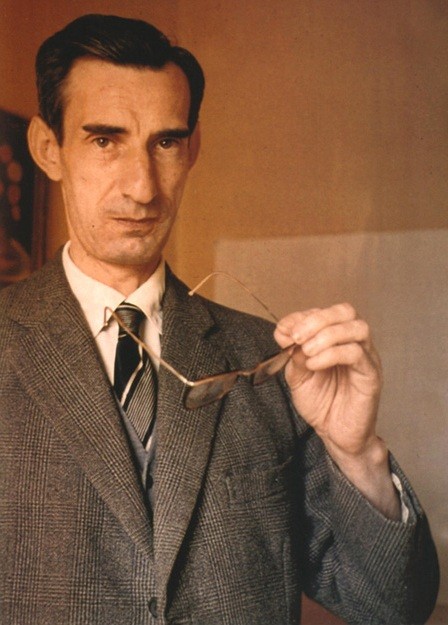
Pierre Plantard de Saint-Clair
Born in Paris on 18 March 1920, Pierre Athanase Marie Plantard de Saint-Clair stands within the uninterrupted current of Merovingian blood and tradition. His surname, far from being a literary or symbolic invention, descends from the ancient epithet Plant-Ard, attributed to Sigibert IV “Plant-Ard”, Ardent Prince, Hermit Count of Rhedae, and Duke of Razès, heir in 681 to the titles of his uncle.
Astrology: Origins, Suppression, and Methodological Recovery
Astrology was not born as a belief system, nor as a psychological practice, but as an observational discipline concerned with the measurement of time, cycles, and celestial regularities. Its origins lie in the ancient civilizations of Mesopotamia, Egypt, and the Hellenistic world, where the movements of the heavens were recorded with precision and correlated with seasonal, political, and historical rhythms.
For centuries, astrology functioned as a technical art of temporal observation, inseparable from astronomy, mathematics, and calendrical science. Courts, temples, and early states relied upon astrologers not for personal advice, but for the interpretation of cycles, auspicious moments, and long-term patterns affecting kingdoms, agriculture, and collective events.
As political power centralized and religious institutions consolidated authority, astrology entered an ambiguous phase. Publicly, rulers and clerical authorities increasingly labeled astrology as superstition, divination, or heretical speculation. Official discourse distanced itself from celestial influence, particularly when it conflicted with theological doctrines of providence and free will.
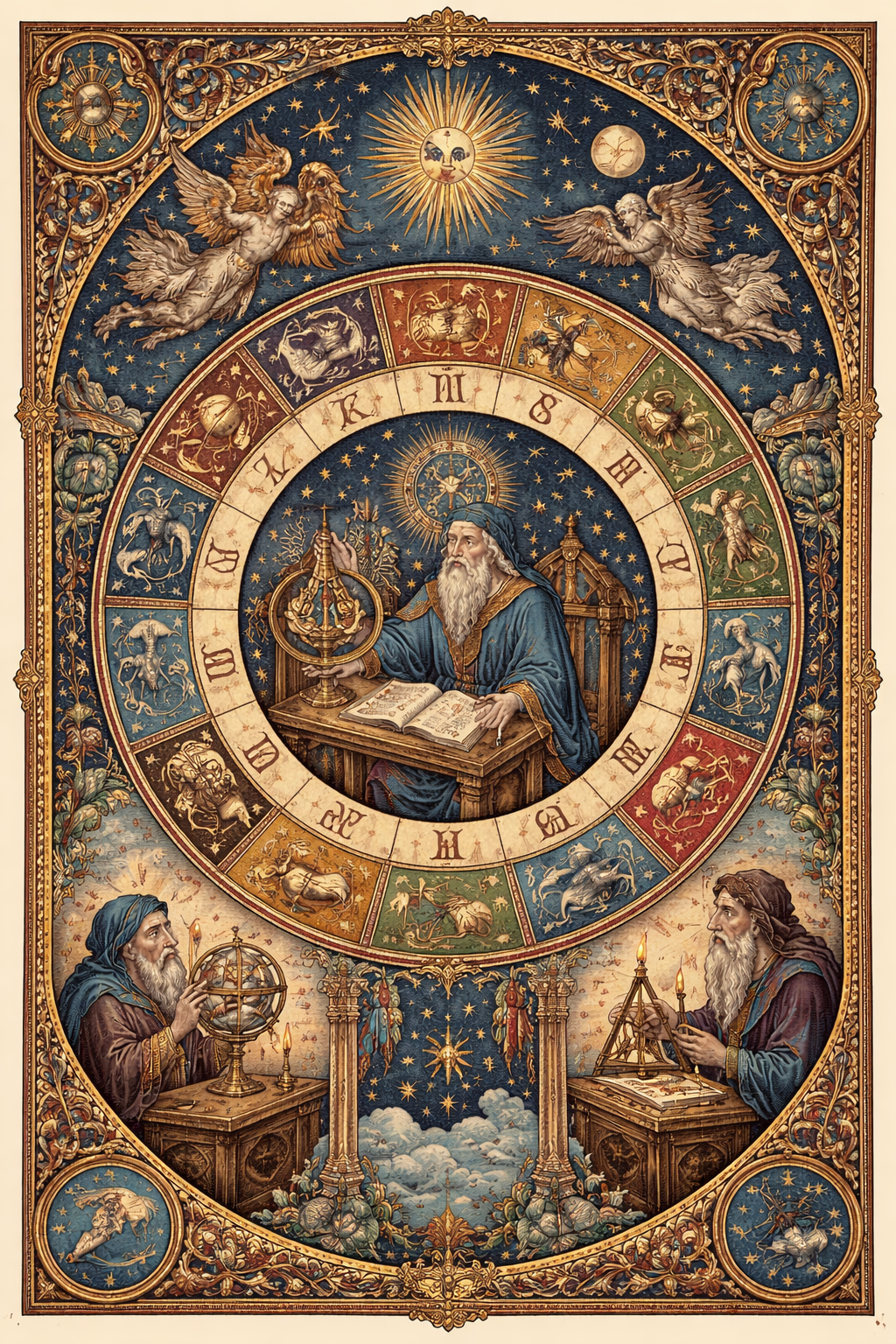
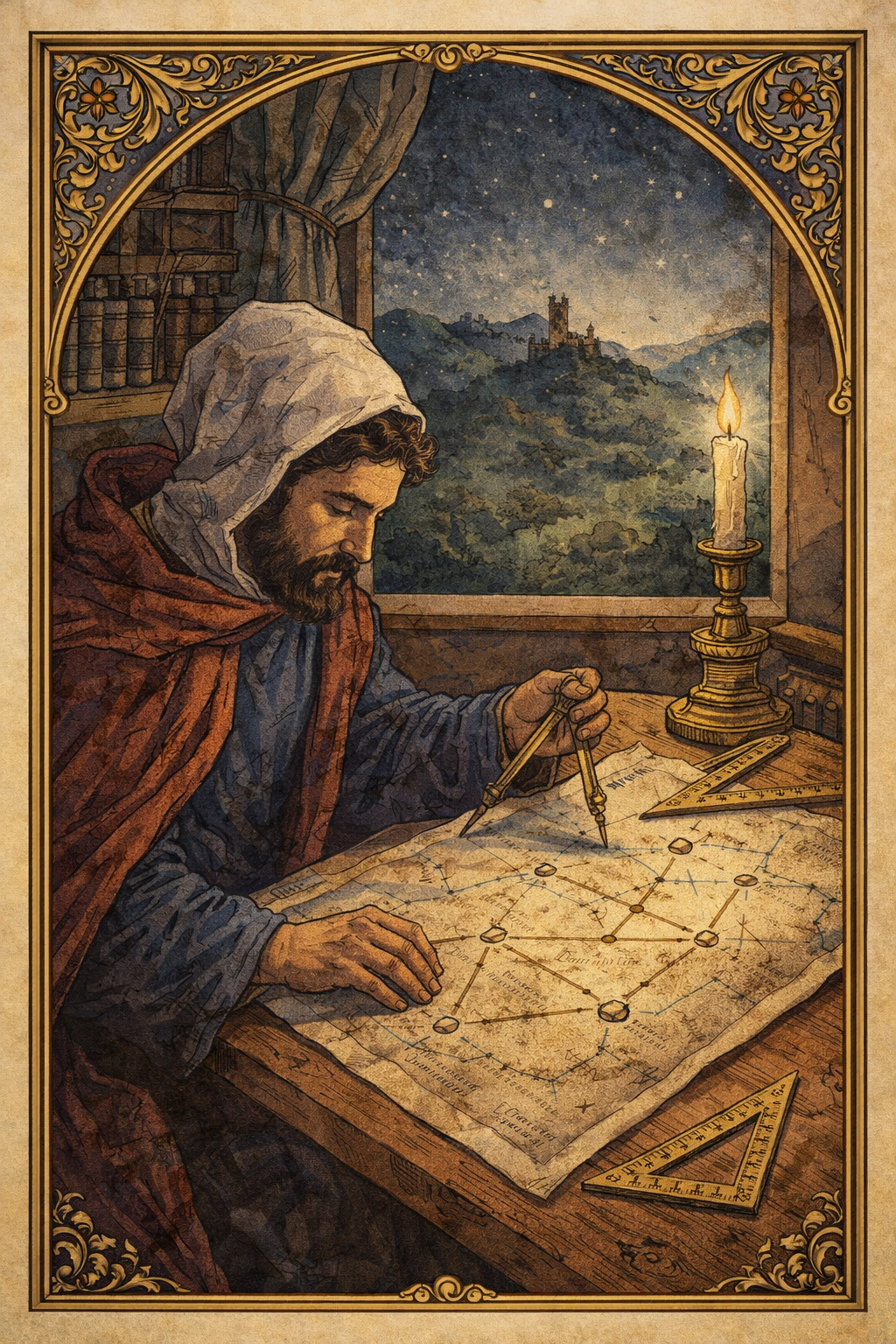
INITIATIC CARTOGRAPHY
Initiatic Cartography is a project dedicated to the study and representation of sacred geography according to traditional, symbolic, and initiatic criteria.
Across civilizations and epochs, temples, sanctuaries, cathedrals, and ritual sites have not been placed arbitrarily. Their locations often correspond to precise orientations, alignments, geometric relationships, and symbolic convergences within the landscape. These sites function not merely as architectural structures, but as nodes within a wider sacred order, where space, time, and meaning intersect.
This section presents a series of Initiatic Map Plates: visual and conceptual maps that document and interpret these sacred configurations using a coherent methodological framework.
The Grand Master
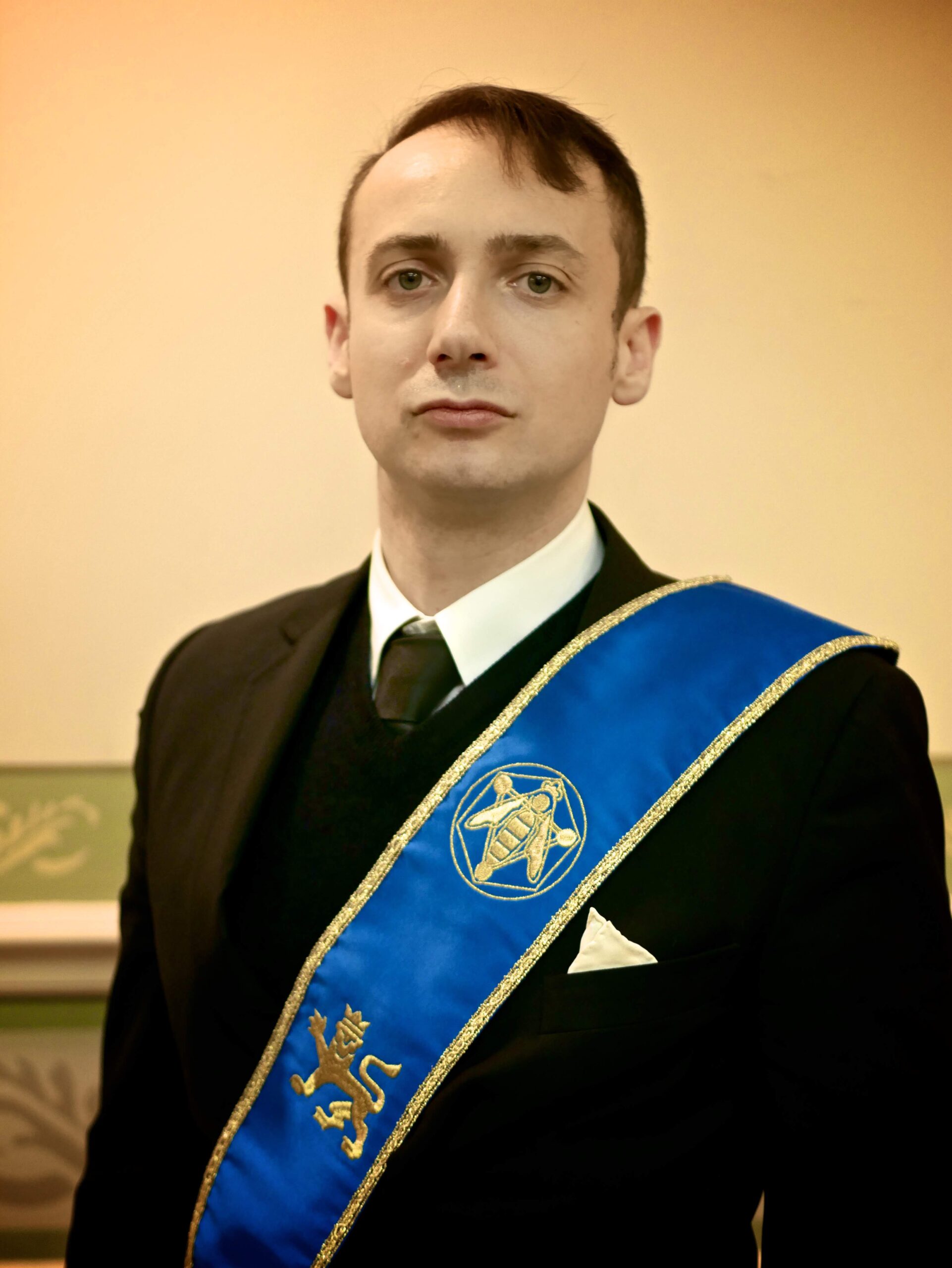
Born in Treviso in 1977, Marco Rigamonti is a writer, researcher, and scholar of esoteric doctrine and chivalric tradition. He currently serves as Grand Master of the Prieuré de Sion, having received the mantle of authority through legitimate initiatic transmission, in accordance with the laws and customs of the Order.
Faithful to the spirit of traditional knighthood, he has undertaken the work of restoring, safeguarding, and ordering the ritual, symbolic, and philosophical corpus of the Prieuré de Sion. Drawing upon ancient chivalric rites, initiatic teachings, and transmitted knowledge, he has articulated a coherent Rule of the Order, ensuring both continuity of lineage and doctrinal integrity while rendering the chivalric path operative in the present age.
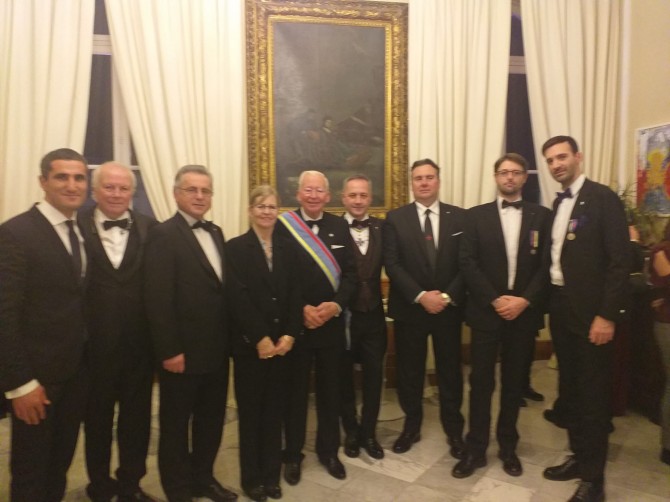
Annual International Grand Chapter
Every year is celebrated the Prieuré de Sion annual International Grand Chapter
During the ceremony will be celebrated initiations and elevations as the ritual will be performed.
News
-
The Divine Comedy as Itinerarium Mentis: A Symbolic–Initiatory Reading of Dante Alighieri’s Path to Spiritual Awareness
Divine Comedy by Dante Alighieri is examined here as a symbolic representation of the human journey toward spiritual awareness, understood… Read More
-
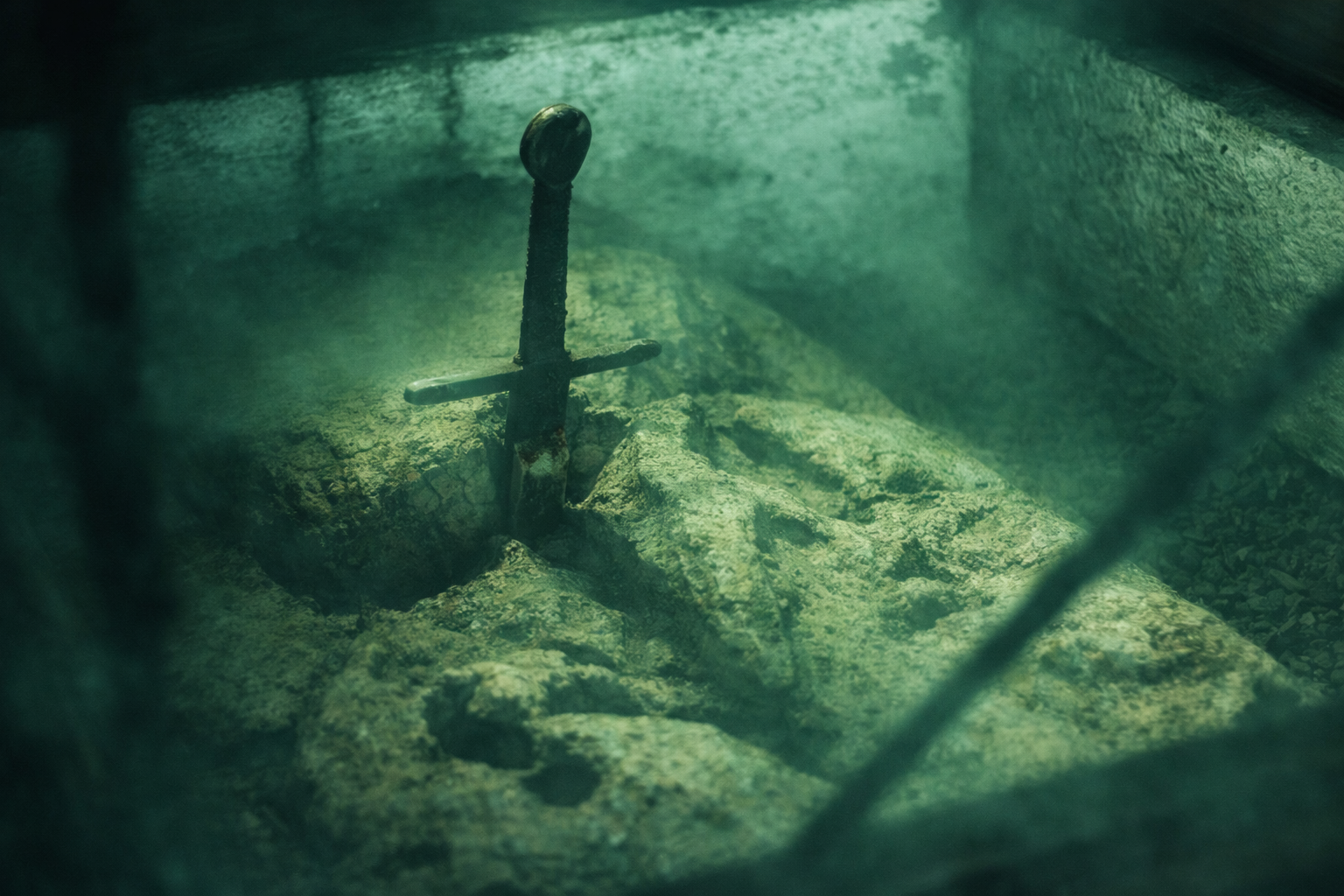
San Galgano, the Sword in the Stone, and the Arthurian Resonance
In Tuscany, within a 14th-century chapel at San Galgano, alongside frescoes attributed to Ambrogio Lorenzetti, a striking relic is preserved… Read More