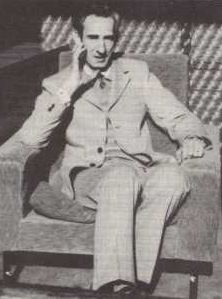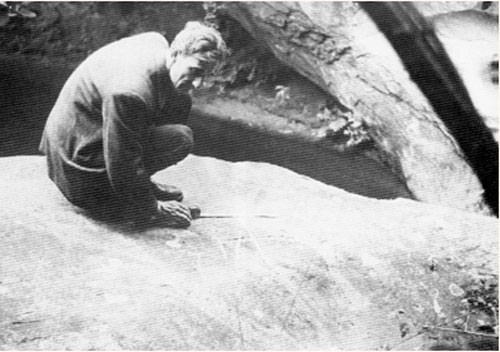
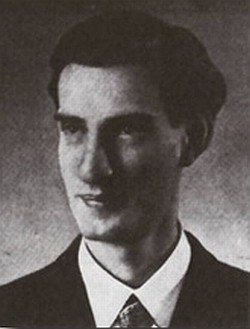
Born in Paris on 18 March 1920, Pierre Athanase Marie Plantard de Saint-Clair stands within the uninterrupted current of Merovingian blood and tradition. His surname, far from being a literary or symbolic invention, descends from the ancient epithet Plant-Ard, attributed to Sigibert IV “Plant-Ard”, Ardent Prince, Hermit Count of Rhedae, and Duke of Razès, heir in 681 to the titles of his uncle. The legitimacy of the name Plantard de Saint-Clair is attested in official civil records and preserved in biographical documentation, notably in Qui suis-je? by Arnaud de l’Estoile.
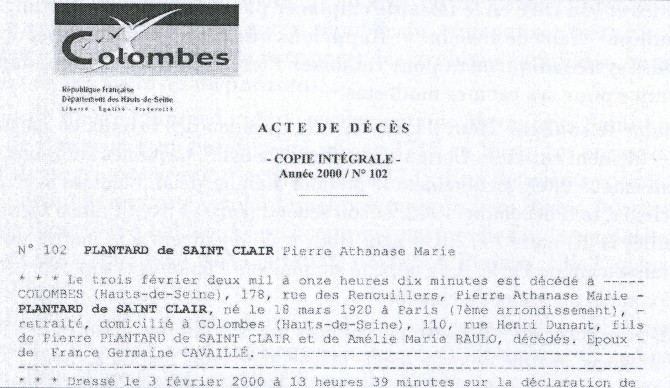
From this lineage originates not merely a name, but a chivalric obligation: the guardianship of a tradition transmitted through blood, memory, and initiation.
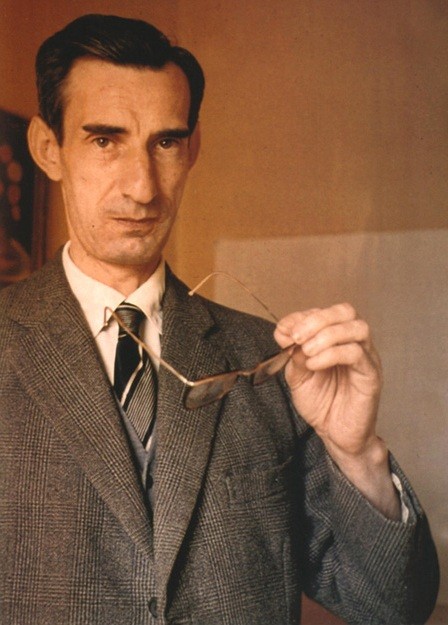
Early Initiation and Formative Transmission
Marked from adolescence by exceptional intellectual and spiritual aptitude, Pierre Plantard entered the initiatic path at a young age. At fifteen, he was received into esoteric study by Geneviève Zaepffel, a renowned medium, who introduced him to the symbolic sciences and the inner disciplines that form the foundation of Western initiatic knowledge. Through this early transmission, the young Plantard was oriented toward a path not of belief, but of knowledge and responsibility.
Soon thereafter, he came under the guidance of Georges Monti—known also as Count Georges Monti, Count Israël Monti, and in initiatic contexts as Marcus Vella. A figure of considerable stature within high-grade Freemasonry and the Scottish Rite, and a member of the Rose-Croix of Toulouse, Monti assumed the role of mentor, shaping Plantard not only in initiatic doctrine but in discipline, strategy, and chivalric conduct.
It was within this context that Monti founded the chivalric Order Alpha Galates, which emerged from secrecy on 27 December 1937, appointing the still very young Pierre Plantard de Saint-Clair as its leader—an event that marked his first public assumption of knightly responsibility.
Chivalric Engagement and Service to the Realm
In keeping with the traditional conception of knighthood as service to the realm, Plantard demonstrated early engagement with the political and cultural destiny of France. His convictions were monarchic in spirit and traditionalist in orientation, yet rooted in a rigorous ethical discipline and an uncompromising intellectual honesty.
This period saw his leadership of Rénovation Nationale Française, and the publication of journals such as Vaincre (1942–1943) and later CIRCUIT, conceived as instruments for the diffusion of philosophical, esoteric, and ideological reflection. These endeavors must be understood not as mere political activity, but as expressions of a chivalric ethos applied to the modern world.
Custodian of Merovingian Memory and Initiatic Knowledge
In 1947, Plantard founded the Académie Latine, a historical research body devoted to the systematic study of Merovingian history and sacred kingship. Through this work, he gathered, organized, and expanded a corpus of knowledge inherited from the Priory of Sion, integrating archival research with traditional transmission.
Initiated into Freemasonry on 8 July 1951 within the Grand Orient of France, through the lodge L’Avenir du Chablais, Plantard further consolidated his position within the initiatic structures of Western tradition.
By the late 1950s, he had assumed roles of public responsibility, notably within the Committees of Public Safety, reflecting once more the traditional principle that the initiate must serve society as well as the inner path.
The Prieuré de Sion and the Grand Mastership
On 7 May 1956, Pierre Plantard founded the Prieuré de Sion – Chevalerie d’Institution et Règle Catholique & d’Union Indépendante Traditionaliste (C.I.R.C.U.I.T.), establishing the only legally registered and visible branch of the Order, conceived as the European institutional vessel of an older and deeper tradition. Jean Cocteau was appointed Grand Master, affirming the Order’s continuity through symbolic, artistic, and intellectual authority.
On 17 January 1981, at Blois, Pierre Plantard de Saint-Clair was elected Grand Master of the original French branch of the Prieuré de Sion, receiving near-unanimous support (83 votes out of 92). His tenure was marked not by public display, but by custodial stewardship of statutes, initiatic transmission, and structural coherence.

After resigning in 1984 for reasons of health, he briefly reassumed the Grand Mastership in June 1989 to enact essential revisions to the Order’s statutes and inner organization. In August of the same year, he formally transmitted the Grand Mastership to his son, Thomas Plantard de Saint-Clair, in accordance with the principle of legitimate succession.
Death and Legacy
Pierre Athanase Marie Plantard de Saint-Clair passed away on 3 February 2000 in Colombes. He remains remembered as a custodian of lineage, a Knight of transmission, and a Grand Master whose authority derived from continuity, initiation, and responsibility.