
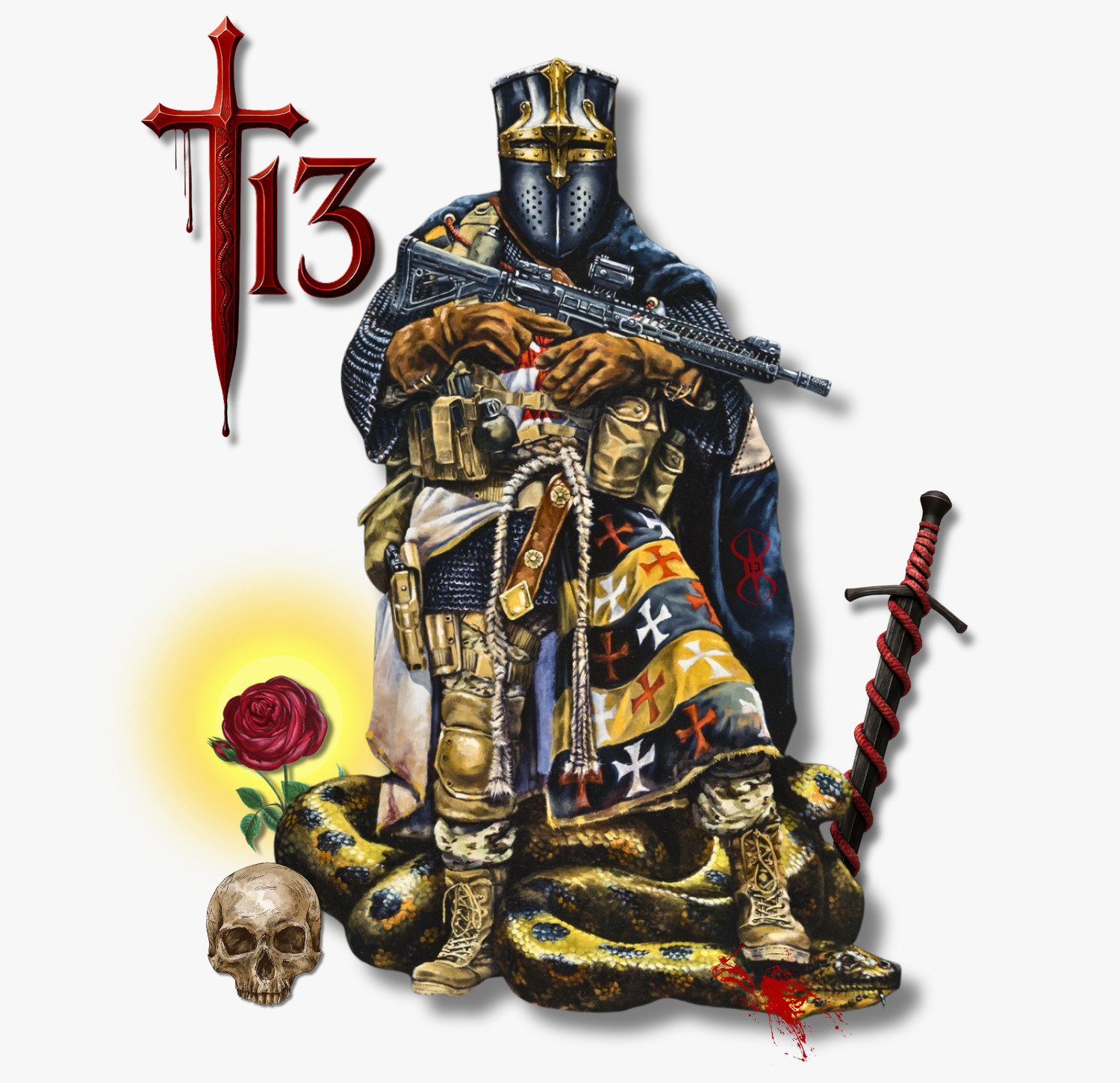
The figure of the modern warrior, more accurately described as the modern Protector, is one of the most misunderstood archetypes of contemporary society. Popular culture often portrays him as aggressive, domineering, or enamored with violence, a man driven by ego rather than principle. Yet this misses the deeper reality. The Protector does not train because he desires conflict. He trains because violence exists whether people wish to acknowledge it or not. His preparation is not rooted in hostility, but in responsibility. His discipline is not aimed at domination, but at capability in moments of chaos.
Safety, freedom, and human life remain fragile, even in societies that consider themselves civilized. Beneath the surface of daily normality lies unpredictability. In rare but decisive moments, only preparation, clarity of mind, physical competence, and faith in God separate order from catastrophe. The modern Protector lives with this awareness. He is not consumed by fear, but neither is he lulled into denial.
Violence has not vanished from the modern world. It has merely shifted form and context. It can erupt in ordinary places such as parking lots, buses, schools, or public squares. It can begin with words and end with bloodshed. It can start with empty hands and suddenly involve weapons. Because of this reality, the Protector cannot afford narrow specialization. He must become a generalist of survival, capable of navigating the full spectrum of danger.
Introduction – What is Tribe 13
Tribe 13 is more than a group, more than a symbol, and more than a philosophy. It is a living path of transformation for individuals who feel the inner call to become protectors in an uncertain world. Born from the spirit of ancient warrior traditions and shaped for the realities of modern life, Tribe 13 represents a community of men and women who refuse passivity, complacency, and fear. It is a bridge between timeless values and contemporary challenges, uniting discipline, faith, responsibility, and practical preparedness.
At its core, Tribe 13 is built around the idea that every person who carries a warrior spirit inside can choose to walk a higher path. This path is not about aggression, domination, or romanticized violence. It is about self-mastery, courage, and service. It invites individuals to transform themselves physically, mentally, and spiritually so they can stand strong when others cannot. Tribe 13 does not promise an easy journey. Instead, it calls its members toward hardship, training, and continual growth, because true protectors are forged through effort, humility, and perseverance.
Through structured training, shared values, and a strong sense of brotherhood and sisterhood, Tribe 13 helps individuals develop the skills and mindset necessary to safeguard what matters most: their families, their communities, and those who are vulnerable. Members learn not only how to defend themselves, but how to think clearly under pressure, act responsibly in crisis, and serve with integrity rather than ego.
Tribe 13 is therefore not simply an organization, but a way of becoming. It is a commitment to evolve from ordinary citizens into capable, disciplined, and morally grounded warrior protectors. In a world where danger still exists, Tribe 13 reminds each individual that protection begins within, and that true strength is measured not by power, but by the willingness to stand between evil and the innocent.
Drawing inspiration from the Knights Templar and old chivalric orders, Tribe 13 rests upon two inseparable pillars, the Sword and the Cross. The Sword represents physical capability, decisive action, and disciplined training. The Cross represents faith, moral clarity, and spiritual transformation. One without the other becomes either reckless power or powerless virtue.
Protectors serve as a barrier between chaos and order, cruelty and mercy, destruction and life. Their mission centers on service rather than dominance. Their strength is guided by love, not ego.
The archetype of the Protector has not disappeared. It lives in those who refuse to accept weakness as destiny and refuse to separate faith from action. Passing this mindset to future generations becomes a moral responsibility, not merely a personal choice. Children must learn not only what to believe, but how to stand.
This path is one of transformation. The Sword builds discipline, resilience, and capability. The Cross shapes humility, faith, and moral clarity. Together they form the foundation of a true guardian of life, dignity, and justice.
Igniting the Flame of Tribe 13
The flame of Tribe 13 does not belong solely to symbols, banners, or traditions. It burns within those who feel the call to protect. Some recognize it early, others only through hardship. It is less about physical strength and more about conviction and responsibility.
To be a Protector means standing when others retreat, speaking when others remain silent, and acting when others hesitate. It means believing that light can prevail even in darkness.
Tribe 13 is not simply a movement or community. It is a beacon for those who reject passivity. True guardians do not rise for recognition. They rise because protection is necessary and love demands action.
The Meaning of the Protector Banner
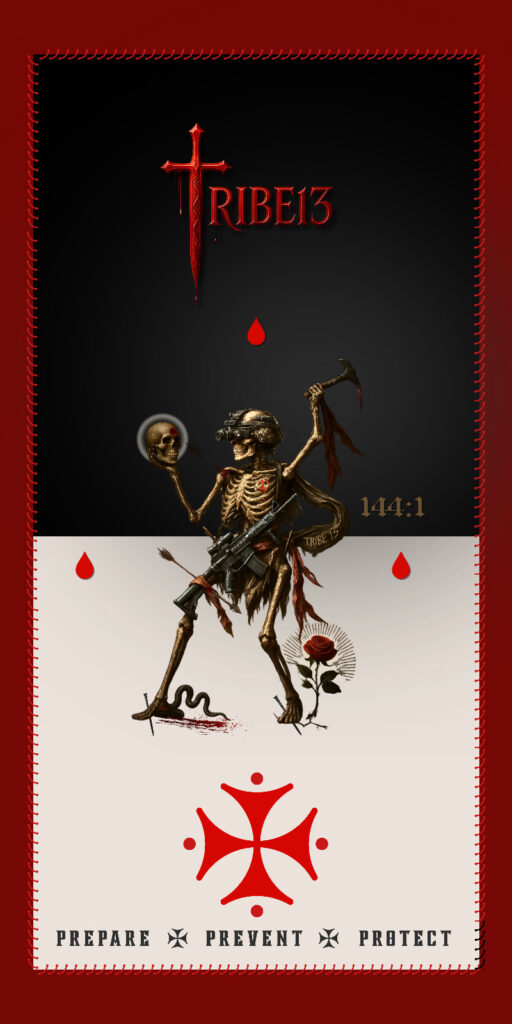
The banner of Tribe 13 functions as a visible creed rather than mere decoration. Divided into black above and white below, it illustrates two realms the Protector must navigate.
White represents compassion, innocence, and the sanctity of life, the world worth defending. Black symbolizes danger, uncertainty, and the weight of responsibility, the realm the Protector must be willing to enter when necessary. Between them stands the Protector, bridging darkness and light through discipline and purpose.
At the base lies a red cross recalling ancient knightly duty, honor, and lineage, accompanied by the words Prepare, Prevent, Protect.
At the center appears a skeletal warrior, not as a literal figure but as a timeless archetype of endurance and sacrifice. His equipment represents mastery of both modern and primal skills, from firearms to blades and medical tools. The tourniquet reflects the duty to preserve life. The helmet and night vision symbolize foresight and awareness. The red rope signifies an oath beyond personal ego.
In one hand rests a skull, a reminder of mortality and urgency. Beside him blooms a rose, embodying love, family, and everything fragile that deserves protection. Together they answer the question of why sacrifice matters.
The Mission of Tribe 13
As rights to self-defense erode and reliance on institutions grows dangerously deep, the Protector symbolizes civilian responsibility and autonomy.
In a world where threats evolve,violence, active shooters, terrorism, home invasions, the Protector embraces training, awareness, and readiness.
The skilled Protector is not a symbol of aggression, but a guardian whose competence in violence serves peace.
For this reason, our Order is NOT an association of individuals who merely want to revel in the nostalgia of the past or enjoy honors or social events, but rather MUST be those committed to aiding, supporting and participating in, each in his or her capacity, the transformation path of becoming better Protectors necessary to defend their families and ones around.
The Importance of Being a Protector: Forging the Essential Skills to Defend and Serve
In an increasingly unpredictable world, the need for capable protectors has become more urgent than ever. These individuals are rarely celebrated, yet they form the invisible shield that stands between vulnerability and harm. They are not seekers of conflict, but guardians who accept responsibility when others prefer comfort. Their presence strengthens families, communities, and society itself. To understand their significance is to understand the deeper nature of security, duty, and human resilience.
The concept of the protector has been powerfully illustrated through the analogy of sheep, wolves, and sheepdogs, introduced by Lieutenant Colonel Dave Grossman. In this metaphor, most people are likened to sheep, peaceful individuals who live their lives without constant awareness of danger. They are neither violent nor malicious, but often unaware of the harsh realities that exist beyond their immediate experience. Wolves, on the other hand, represent those who prey upon the weak, criminals and individuals driven by cruelty, greed, or destructive intent. Between these two groups stands the sheepdog, the protector who chooses vigilance over comfort and responsibility over indifference.
The sheepdog does not live among the sheep to dominate them, but to defend them. He must understand both the nature of violence and the value of life. This role is not inherited at birth, but cultivated through discipline, training, and an unwavering sense of duty. Grossman’s analogy reveals a deeper truth about society. Peace does not maintain itself. It depends on individuals willing to stand firm when danger emerges.
Becoming a protector is therefore not merely a matter of acquiring technical skills. It requires a transformation of mindset. It demands commitment, perseverance, and moral clarity. The path begins with a conscious decision to accept responsibility for others, even when it is uncomfortable or risky. It continues through continuous training, the refinement of both physical and mental abilities, and the willingness to learn from failure. Equally important is community, the bond among those who share the protector’s calling, where knowledge is exchanged and mutual support strengthens resolve. Above all, it requires a mindset rooted in service, where the safety and well-being of others always take precedence over personal convenience.
Protectors play an essential role in the fabric of society. Their presence alone can deter wrongdoing, and their readiness can prevent tragedy from becoming catastrophe. By preparing themselves to respond effectively in moments of crisis, they contribute to a safer and more resilient world. Their impact extends beyond individual incidents, shaping a culture that values responsibility, courage, and mutual care.
In this context, Tribe 13 emerges as a modern embodiment of the ancient protector archetype. Drawing inspiration from the knightly orders of the past, Tribe 13 represents a contemporary interpretation of chivalry, discipline, and selfless service. Like the medieval order that once safeguarded pilgrims and the vulnerable, its members see protection as both a practical duty and a spiritual calling. The number thirteen serves as a reminder of endurance, recalling the historic persecution of the Templars on Friday, October 13, 1307. For Tribe 13, it symbolizes resilience, sacrifice, and the unbreakable spirit of those who refuse to abandon their mission.
Modern knights within Tribe 13 dedicate themselves to comprehensive preparation across multiple disciplines. Combat readiness stands at the forefront, emphasizing practical, ethical self-defense and the ability to neutralize threats while minimizing harm. Members train in lawful weapons proficiency where appropriate and develop tactical awareness to navigate dangerous environments effectively. This is not about aggression, but about competence and responsibility.
Trauma Medicine
Equally central is trauma medicine, recognizing that protectors are often the first responders in emergencies. They learn to control life-threatening bleeding, perform basic life support, and stabilize injured individuals until professional medical help arrives. Carrying and properly using trauma kits becomes a moral obligation rather than an accessory.
Survival skills further expand their capability beyond immediate threats. Whether in urban or wilderness settings, protectors must know how to navigate, secure shelter, and manage resources wisely. Mental resilience is cultivated to maintain clarity and leadership under extreme stress.
Community defense forms the final pillar of their mission. Protectors do not act in isolation. They educate others on situational awareness, promote de-escalation and conflict resolution, and help organize preparedness initiatives within their communities. In doing so, they strengthen collective resilience rather than relying solely on individual action.
At its core, the spirit of Tribe 13 is about being ready when conflict becomes unavoidable. It is about standing between danger and the defenseless, offering aid rather than intimidation, and inspiring others to adopt a similar sense of responsibility. This spirit is fundamentally selfless, calling individuals to rise above complacency and realize their potential as guardians of life.
Disclaiming
Tribe 13 does not invite people to join for titles, prestige, or symbolism alone. It calls for action, discipline, and commitment. The modern world faces complex and evolving threats, and the need for prepared protectors continues to grow. Answering this call requires courage, humility, and the willingness to train consistently, even when no immediate danger is visible.
Ultimately, the question remains open for every individual. Who will stand when others hesitate? Who will prepare when others remain indifferent? Who will protect when protection is needed most? The journey begins with a single choice, to ignite the flame of the protector within and walk a path of responsibility, service, and strength guided by purpose.
The Universal Call of the Protector
Not every person is called to wear a uniform, carry a weapon, or serve in law enforcement or the military, yet the spirit of the Protector can live within anyone. The warrior heart is not defined by profession, rank, or title, but by character, discipline, and willingness to stand when others retreat. A teacher who protects children in an active shooter situation, a medic who saves lives under pressure, a firefighter who enters danger without hesitation, a police officer who serves with integrity, or a civilian who refuses to abandon the vulnerable in a crisis can all embody the Protector archetype in different ways.
What unites them is not their job, but their mindset. They share an inner commitment to responsibility, courage, and service. They understand that protection is not merely a role assigned by society, but a calling that begins within the individual. This calling does not demand perfection, but transformation. It requires a willingness to confront one’s fears, discipline the body, sharpen the mind, and strengthen the spirit.
Becoming a true Protector is therefore a path rather than a destination. Each person who feels the warrior spirit stirring inside must choose whether to ignore it or cultivate it. The path of transformation involves physical training, combat training, mental resilience, moral clarity, and continuous self-improvement. It is forged through hardship, repetition, humility, and commitment. It is not an easy road, but it is a necessary one for those who wish to stand between evil and the innocent.
To walk this path is to accept that good intentions are not enough. A Protector must be capable, not only compassionate. Strength must be built, skills must be earned, and character must be tested. Only then can an individual truly step forward in moments of crisis and act decisively to defend those who cannot defend themselves.
In the end, the question is not whether someone is born a Protector, but whether they are willing to become one. The world does not need more spectators. It needs men and women who are prepared, disciplined, and courageous enough to answer the call. The flame of the Protector already exists in many hearts. Whether it remains a flicker or grows into a guiding fire depends on the choices each person makes.
The path stands open. The need is real. And the moment to begin is always now.
Tribe 13 Actually organizes periodical Boot-Camps. To attend them, you can visit the Tribe 13 Official Website and Apply.
Tribe 13 2026 Upcoming Bootcamp