

For decades, advanced research into gravity manipulation, antigravity propulsion, and space-time physics has existed at the intersection of theoretical science, military secrecy, and experimental aerospace engineering. Although officially treated as speculative or fringe topics, numerous scientists, defense contractors, and classified programs have continued investigating technologies capable of radically transforming transportation, energy production, and even humanity’s understanding of reality itself.
One of the most discussed figures in recent years was American researcher Amy Eskridge, who specialized in antigravity propulsion systems. Her work focused on methods of reducing or manipulating gravitational effects through advanced electromagnetic interactions. Following her death in 2022 under unusual circumstances, renewed attention emerged around the long history of scientists connected to sensitive aerospace and defense research who later disappeared, died unexpectedly, or vanished from public life.
At the center of these investigations lies one of modern physics’ greatest unresolved problems: gravity itself. Newton described gravity as an attractive force between masses, while Einstein later redefined it as the curvature of space-time produced by matter and energy. Yet gravity still remains fundamentally separated from the other three known forces of nature — electromagnetism, the strong nuclear force, and the weak nuclear force — all unified within the Standard Model of particle physics. The hypothetical graviton, believed to mediate gravitational interaction, has never been experimentally detected.
This theoretical gap opened the door to generations of unconventional gravity research. Thomas Townsend Brown explored “Electrogravitics,” claiming high-voltage capacitors could generate thrust without moving parts. Nikola Tesla proposed electromagnetic propulsion systems based on his ether theories. John Searle developed the “Searle Effect Generator,” while Norman Dean experimented with reactionless propulsion systems. Henry Wallace investigated rotating metallic discs capable of generating anomalous gravitational fields, and Eric Laithwaite observed unusual gyroscopic behaviors suggesting previously unknown mechanical effects.
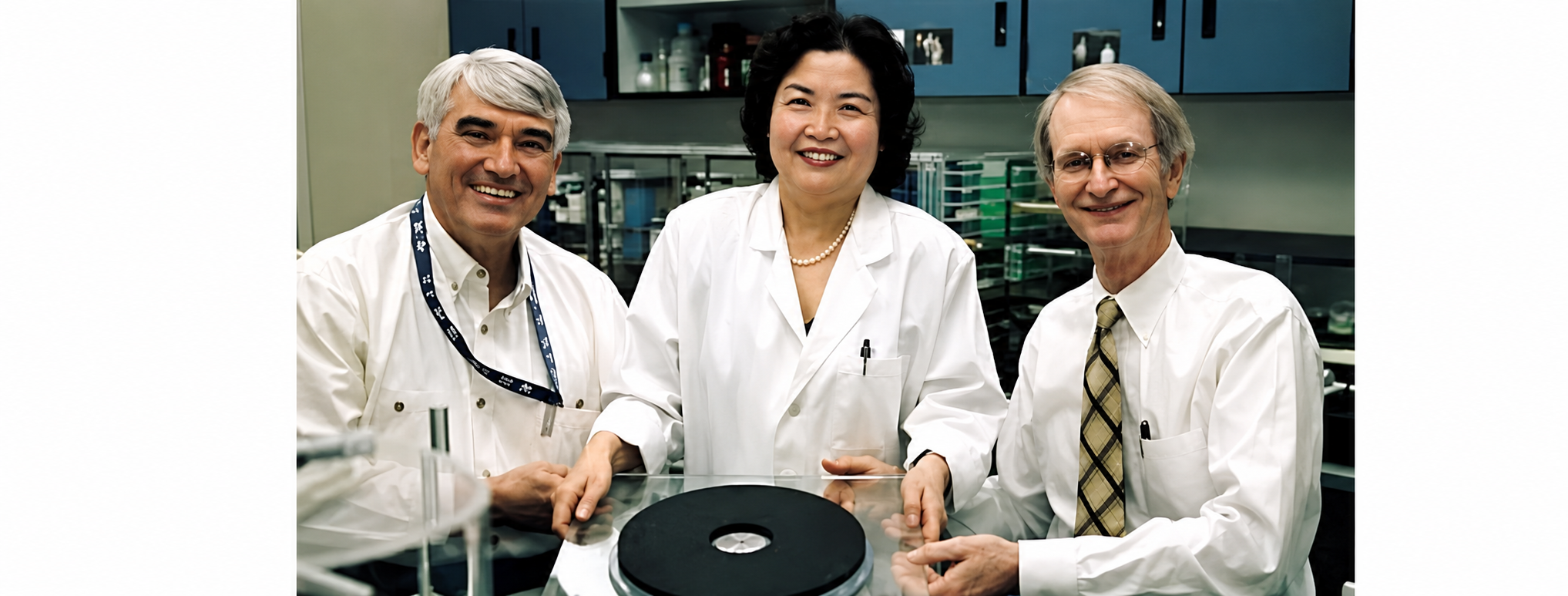
Particular attention has been directed toward superconductors and gravitomagnetic phenomena. Physicist Ning Li theorized that superconductive materials exposed to magnetic fields could align ionic spins and generate controllable gravitational effects. After collaborating with NASA and receiving Department of Defense funding, she largely disappeared from public scientific activity. Similarly, Eugene Podkletnov claimed that rotating superconducting discs could measurably reduce the weight of objects placed above them. Portions of this research were reportedly tested under classified aerospace programs.
NASA and defense agencies also examined alternative propulsion concepts such as Jim Woodward’s “Mach Effect,” where rapid internal energy fluctuations could theoretically produce thrust without conventional propellant. Boeing’s classified GRASP program reportedly investigated advanced gravitational propulsion technologies linked to these same principles.
The subject extends even further into advanced space-time engineering. Pentagon research initiatives explored wormholes, negative energy, vacuum energy extraction, and warp propulsion systems inspired by the Alcubierre Drive model, in which space-time itself could be compressed and expanded around a vehicle to enable faster-than-light travel without violating relativity.
Parallel investigations allegedly examined the possibility of multiple coexisting timelines and probabilistic realities. According to testimonies connected to covert programs such as Majestic 12, devices known as “Looking Glass” systems were developed to analyze overlapping future probability structures, functioning almost like multidimensional predictive engines. Related “Stargate” technologies allegedly interacted with naturally occurring electromagnetic anomalies on Earth, using Einstein-Rosen Bridges — theoretical wormholes — as gateways through space and time.
Whether viewed as suppressed science, classified military technology, or the frontier of theoretical physics, the consistent pattern remains undeniable: governments, aerospace corporations, and advanced research institutions have spent decades investing enormous resources into gravity manipulation, consciousness studies, space-time physics, and unconventional propulsion systems. Behind these projects may lie discoveries capable of redefining energy, transportation, and humanity’s understanding of reality itself.